Laugh Track
sitcom, ca. 2015
The tv plays through two speakers positioned either side of the screen, and they fill the room with a crunchy canned laugh track. I’m focused on my fish and chips, using a spork to swish my steamed dim sim around in the sauce—when my dad lets out a hearty laugh. It cracks into a cough, and then a wheeze, as he pats his chest.
I look up at him, then at the screen, wondering what I missed. But there’s this … shining woman. Her silver sequin dress flows over full curves, and down to the stage as she dances across it. She’s singing with a voice that commands the room.
But the laugh track comes back. Again, and again. She can barely get a line out. It’s stifling. My breath chokes up in my throat and I need to know that I missed a joke, that there’s subtext I’m not reading, that this isn’t why they’re laughing.
Entertainment Weekly, 2022
“I don’t think it’s aged well. It was a 30-minute sitcom. It became a phenomenon, but no one ever took it seriously as a social comment,” Turner told the Gay Times in 2018, adding that people felt the character was “just dressing up” instead of accepting her identity as legitimate.
toilet paper, ca. 2013
There’s a humming noise through the bathroom window’s flywire, of far-away cars, people who still aren’t asleep yet. I pour myself a cup of water, as quietly as I can, avoiding the spots on the floor that creak.
When I put the cup back, I notice a headband next to the sink. It’s probably Yan’s, knowing how messy her room is. A plain black plastic one, almost a full circle, it has these little black comb teeth on the inside. The texture calls to me, so I pick it up.
Running my fingernail across them, rubbing them with my thumb, they’re pokey but not spikey. Like I’ve seen girls at school do, I hold the hairband up to my forehead, and push it back across my hair. Tucking it behind my ears, it feels tight, but snug.
I need to clamber up onto the sink to see into the mirror, but when I do, I freeze for a moment. It’s … really cool. I look just like Yan—her hair’s dark like mine, but I don’t have the blonde streaks. When I look down to my pyjama shirt, though, just lying flat across my chest, it feels wrong.
Slipping back down to the tile floor, probably louder than I should be, I grab the toilet paper roll from next to the bin. I poke two fingers into the cardboard tube, and with my other hand, pinch and pull the edge of the paper. It spreads out, and I rip it off, then do it one more time, and ball up the toilet paper.
For the second time, climbing back up the sink, I sit on my knees and watch my reflection. I push the two balls of toilet paper under my shirt collar, one over each nipple. Two bumps. The fabric tenses a little over them, curving, before falling flat over my tummy. I feel warm. I feel soft.
And I just look. Watch. Stare.
In the mirror, I see Noah turn the corner behind me. I snap to look at them, and my body isn’t warm anymore, it’s hot—the fabric on my chest itches, the tips of my ears burn. I know they’re going to laugh. Please, don’t laugh. Please, don’t tell anyone. Please, don’t laugh.
Arlo & Hayfitz, YouTube, 2024
A letter arrived in the post and it was addressed to my new name. [Mum], basically, was like, ‘who’s that, that person doesn’t live here’, and obviously like she didn’t get that it was a gender thing …
There was such a clash of joy and sorrow between us, because I was finding myself, and like really feeling like my perception of myself and the world had changed. I really was experiencing gender euphoria for the first time.
interschool sports, ca. 2014
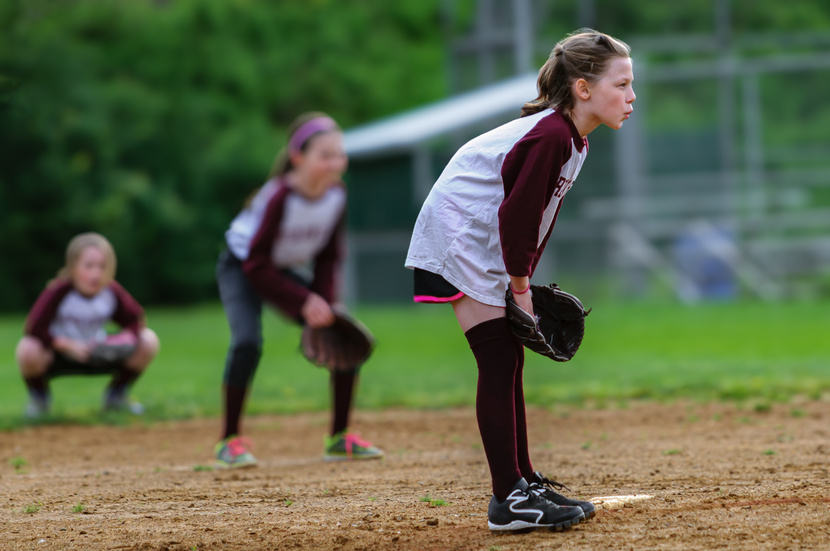
Wringing the leather glove in my hands, I lean from foot to foot. A soft wind blows over the short oval grass. Some girl’s been walked off-field by the other team’s coach, and the batter on second base turns to say something to me.
‘That was Ruby. She’s been kinda sick all day.’
I don’t really know what to say—I didn’t think we were really meant to talk to the other school’s kids. I like her ponytail, though, it’s really long and blonde, peeking out from under her helmet.
‘Oh, yeah, okay.’
When their coach finally reappears, trudging up the side of the oval, she calls out to our teacher. I can’t really hear from here, but after a moment, Mrs. E turns to the field.
‘Any volunteers to even out the teams?’
My dad always says you don’t get anywhere if you don’t put up your hand, so I do—and then the batter sees me, and a smile lights up her face.
‘Oh my gosh, you can be our new Ruby!’
I get this … weird feeling. Maybe it’s ‘butterflies’, that’s what I’ve heard people say on the telly. Do butterflies feel like reaching the top floor on an elevator, for a moment feeling like you’re still going up, that your feet are going to leave the ground?
And they do, for a little. On my tippy toes, almost tripping, I’m waving my hand in the air like crazy.
When Mrs. E points to me, I push off with my back foot and the wind rushes through my shirt as I sprint to the batting line. The other team’s coach is already holding out a helmet for me, so I grin up at her and take it, before rushing to sit by the others. Even though I’m wearing green, and they’re wearing red, we feel like a matching bunch with our helmets. One of them turns to me and giggles,
‘Oh, you got better quick, Ruby!’
…
The next day at school, I’m sitting on the concrete steps to the canteen. The smell of garlic bread cooking and slushies stirring wafts over, and a queue mumbles along behind me. When one of my teammates, Jack, puts himself down next to me, I offer him some of my chips.
‘Oh, thanks, Ollie.’
It’s not the elevator feeling, this time. It’s like there’s food coming up in my throat. Like I’m going to vomit but there’s nothing there.
‘Not … Ruby? Y’know, ‘cause I swapped teams, and—’
He looks at me, blond fringe covering his eyes, before he sweeps it out of the way.
‘Yeah … and we’re not playing anymore, so…’
I stare into my lunchbox.
‘Yeah. Of course. Just joking.’
He laughs. I try to do the same.
Lindsey Danis, lindseydanis.com, 2022
When you feel like your whole world will change if people know the truth, it’s natural to want to hide. People sometimes stay closeted when they’re not sure how they identify or where they fit. Until they are sure, they convince themselves, it’s better to say nothing. The closet is a lonely, scary place. It’s filled with stress and anxiety. From the closet it can feel like everything you want is out there, in the life you’re not brave enough to have.
hotline, ca. 2018
I’m standing at the intersection sign in front of my house, grass between my toes, twilight humming in the tone of bugs. I have a hand-me-down iPhone 4 held against my ear.
‘I just can’t see myself living past 30. 20, even.’
The old man on the other end of the line tells me a platitude about how I should live as my most authentic self, or something, I don’t remember. When he hung up, because he had other calls to attend to—and I was not ‘high risk’—I felt like I’d been making it all up. Or that it somehow wasn’t as bad as I thought. I’m coaxed back, and I listen, because this long-lived person has given me their advice and their time. I’m coaxed back, to forgetting, until the next time.
Kat Clark, TEDx Talks, 2019
During my time while studying, I created one of the first ever LGBTQ support groups, called ‘Tauranga Pride’, and my reason for this is that I didn’t want to see another young person go through what I had to go through, just to discover who they are. One member … told me when he walks through the doors at Tauranga Pride, he forgets all the bullying and all the harm that he sustained that day at school and leaves it at the door and comes to a place of acceptance understanding and Aroha (Māori for love).
gender sexuality alliance, ca. 2019
Sitting in a pronoun circle is something I’ve never done before, and so I’ve never had to feel all eyes on me as the implication lingers in the air, and my tongue feels leaden in my mouth.
I’m sitting on a table, legs crossed with considerable effort, as my stuffy uniform pulls on my joints. Under this scarf, this blazer, this white button-up shirt with a tie and navy slacks, it’s hot. It’s stifling. The other kids are in different states of relaxation, arms slung over chairs, feet up on tables, some leaning against the walls.
I slip pull on one end of my scarf, and it unravels in my lap.
‘I’m, uhm, it’s my first time. Here.’
I pad for time. I can’t see anybody else in the red-accented colours of the boys’ middle school, but I’m sure there are some boys among the group. Just wearing what they have to, to avoid detention.
Some of my friends I met in the library, between classes, insisted I come along with them. Ash, Quinn, Alei. They’re sitting beside me, watching—same as the others, but with gentle smiles and subtle nods.
‘You can call me Liv.’
My eyes dart between their faces, and my tinnitus acts up, filling the quiet room with a growing buzz. But they break the ringing silence.
‘Hi, Liv!’
About five of them say it, but everyone gives me a smile. Ash squeezes my knee. I feel blush on my cheeks, and new breath in my lungs. Sure, I didn’t actually give my pronouns, but … as I watch the circle continue, and I see the smiles, the nods, the affirmations, I know that whatever answer I give will be right. I won’t be ridiculed in this room.
Me, My Diary, 2020.
I came out to myself yesterday … I’m scared.
I know it’s gonna be hard but I can’t keep trying to keep it down. My identity, myself …
It took me so long because I was always afraid that I’d never be good enough. I always thought, I couldn’t be trans but if I could be a cisgender girl I’d say yes in a heartbeat. I thought I’d always be a boy in a dress, that I wasn’t good enough to be a girl and that I wasn’t ‘trans enough’ …
My cowardly instincts are telling me to crawl back into my terrible, uncomfortable, safe hole. I say fuck you cowardly instincts. I’m gonna fucking run this world and I’m doing it as me.
Reflective Analysis
Dr. Tony Birch, Australian author, poet, and climate change activist, said that his novel Ghost River was formulated structurally as a ‘list of very dominant memories … that were seminal to [his] central understanding of how the world works.’ (Birch & Sefton-Rowston 2017, NP). In this way, reiterating important and shared stories, he felt able to address important issues in the same way that a frank kitchen-table dinner discussion would (ibid: NP). This rang true to me, as someone who finds such narratives consisting of disparate elements raw and compelling. I experience time-skipping, place-hopping modes of storytelling as more representative of how I remember my life, in events and stories, rather than a consistent flowing narrative; and as Birch says, they have become central to my understanding of the world. This is the ethos I have sought to bring into my creative artefact.
In Laugh Track, I have put my efforts towards ordering a series of experiences that give a glimpse into my life and understanding of queer, trans childhood. The most important queer memories are scattered throughout one’s life, but can be gathered through reminiscence to great effect. This is also a genre-crossing project, as I incorporate interviews, talks, and articles about issues that impact queer kids; a deliberate choice to represent a queer child’s pointed intake of the discussions around them, and how this affects their identity-making.
In ‘A Braided Heart: Shaping the Lyric Essay’ (2021), Brenda Miller utilises the titular form to expertly tell multiple tales in turn, that form a greater whole. She reminisces on her Jewish childhood (ibid: 40), her experiences meeting other artists and developing her craft (ibid: 48), and more, within the frame of teaching her class about lyric essays through the central metaphor of Challah Bread. Miller’s lyric essay exemplifies the form through use of diverse but intertwined topics and forms, abstract but helpful signposting of separations, and a satisfying story frame. Using recipe outtakes (ibid: 40–41) is thematically appropriate for discussions of food, and what constitutes a lyric essay, in the same way that ingredients form a product. I have used interviews in my artefact, to achieve a similar thematic continuation, but with an altered choice of form. Rather than recipe steps, interviews and speeches reflect themes of discussion and individual identity, deeply important to Laugh Track’s central issues.
This creative artefact began as an exploration of representation in media, then specifically queer coding. The reduction in scope was useful to develop a unique artefact; however, I then found myself without a message, simply writing disconnected scenes of queer-coding examples. In reconstructing my story after being inspired by writers like Miller and Birch, I’ve been able to find the emotional thread within Laugh Track, and its dips and peaks. Founded on the initial scene that depicts painfully a central issue—being misrepresented and misunderstood—it regresses to a younger child’s experiences, and develops their queer awareness. From ignorance, to curiosity, being mocked, and finding real queer people, community, and identity. These are the stories that I have told to my family, friends, and partners over the years—to myself, critically—that have solidified my queer history in my memory.
In ‘Pearl’ (2014), Ellen van Neerven weaves together two perspectives, four women, and many times and places; she crafts a tapestry of details and experiences, that tells the story of a woman pigeonholed as trouble, who had a secret child, and who disappeared from the family record. All throughout, marked by tildes, van Neerven alternates between the protagonist and the pie shop owner’s recollections to fill in the gaps of the overarching story and connect the characters.
Expertly, she wraps the story up in a cyclical nature as the protagonist accepts and carries the legacy of Pearl, with the message that ‘the stories we construct about our place in our families are essential to our lives.’ (ibid: 17). This sentiment is echoed by Dallas John Baker’s paper ‘Creative Writing Praxis as Queer Becoming’ (2013), which specifically states that textual exploration of queer identity and queer stories can ‘[undo] one’s personhood and facilitate the emergence of a new subjectivity’ (ibid: 360). In my work, I have strung together stories about myself, my family, and my experiences in developing my gender identity as I discover new information about myself. With narrative vignettes, I’ve depicted learning that I feel incomplete without breasts, that I love being called by a girl’s name, and that I can’t go on living as a boy. These things come together and, as van Neerven writes, ‘So much is in what we make of things’, I understand and reiterate them all as pieces of the same gender puzzle, and write myself a new identity. It’s an identity made of words, feelings, and dreams.
Where in ‘Pearl’ van Neerven uses another character’s perspective to fill in gaps in information—‘she told me a story, starting with my grandmother’s real name, Pearl.’ (van Neerven 2014, p. 6)—I’ve incorporated the perspectives of other trans people to broaden the reader’s understanding of the child-me’s perspective. It functions to provide retrospective insight into my feelings and thoughts, whilst informing the reader of broader trans experiences, and the ways in which my story can speak to them. Child-me doesn’t understand the impact of idolizing Fiona on Adventure Time, but the context of other trans people’s experiences contextualises that moment as having ‘planted seeds to who [I’d] become.’. Doing this will result in the reader taking home new knowledge about the hardships and joys of transitioning, specifically as a child isolated from queer subjects.
K-K-K by Lauren Foley (2016) influenced my writing by reminding me just how important the register of intelligence is when writing from a child’s point of view. Far from being dumbed-down or sanitised, Foley writes an observant perspective that notices small behaviours like when her mother ‘crosses and uncrosses her feet at the ankles’ (ibid: 45), but lacks key information that has been withheld from her, such as ‘how [she] is having a baby’ (ibid: 44). This is something I have tried to echo in writing details that my protagonist (child-me) could have recognised, paying attention to what people find funny and anticipating what people will ridicule, but with a lack of life experience that leads to describing internal sensations in a unique way—elevators lurching, vomiting with an empty stomach, and not being able to identify gender euphoria or dysphoria.
Finally, I’ll touch on the inspiration I found in Roanna Gonsalves’s Interrupting Intersectionality (2021), a deconstruction of literary depictions of the intersectionality of marginalised identities. Gonsalves calls for creative writing in ‘ways that are fresh, ways that reject cliché’ (ibid: NP), by ‘destabilis[ing] expectations around gender … class and ethnicity’ (ibid: NP). What initially seems a challenging title—’interrupting’ a term that fosters complex empathy—gives way to a compelling argument for dissolving solid boundaries around labels, for the sake of creating ‘new knowledge through our imaginative labour’, and exploring ‘power, desire and change, in relation to language, character and story shape’ (ibid: NP). This pursuit is not only objectively queer, but exists in opposition to ‘heteronormative knowledges and institutions’ and therefore is aligned with queer theory (Barlow 2015, p. 2), as defined by Damien Barlow in his analysis of queer Australian fiction. I have, through depicting the growth and change of the protagonist’s gender identity and evolving perspective, echoed Gonsalve’s sentiment of honouring identity as ‘an unstable configuration that is more than the sum of its parts’ (ibid: NP), and contributed my own knowledge to queer theory, against the cis-hetero-hegemony. This is more informative, and more true-to-life, than depicting some sort of one-directional, one-size-fits-all narrative of trans-ness.
To conclude in the spirit of queer theory by challenging literary and academic hegemony, I echo the sentiment of Jenny Helin and Shantel Martinez. The ‘industrialized need for closure’ that manifests in introductions, conclusions, and ‘repetitive clarifications’ (Helin 2018, p. 97), ‘leaves the student in-complete, partial of an education’ by standardising and sanitising an author’s ideas into a ‘palatable’ form (Martinez, 2013, p. 7).
Reference List
Baker, DJ 2013, ‘Creative writing praxis as queer becoming’, New Writing, vol. 10, no. 3, pp. 359–377.
Barlow, D 2015, ‘‘Rupture and rapture all at once’: Queer Australian fiction 2000-2014’, TEXT, vol. 19, no. 31, pp. 1–12.
Birch, T 2017, ‘’You’ll be great, but only if you work your arse off.’ An interview with Tony Birch by Adelle Sefton-Rowston’, interviewed by Adelle Sefton-Rowston, Overland, viewed June 5, 2025, <https://overland.org.au/2017/03/youll-be-great-but-only-if-you-work-your-arse-off-an-interview-with-tony-birch/>
Foley, L 2016, ‘K-K-K’, Overland, no. 222, pp. 42–47.
Gonsalves, R 2021, Interrupting intersectionality, Sydney Review of Books, viewed April 11, 2025, <https://sydneyreviewofbooks.com/essays/interrupting-intersectionality>
Helin, J 2019, ‘Dream Writing: Writing Through Vulnerability’, Qualitative Inquiry, vol. 25, iss. 2, pp. 95–99. https://doi.org/10.1177/1077800418810984
Martinez, S 2013, ‘“For our words usually land on deaf ears until we scream”: Writing as a liberatory practice’, Qualitative Inquiry, vol. 20, iss. 1, pp. 3–14.
Miller, B 2021, ‘A Braided Heart: Shaping the Lyric Essay’, in A Braided Heart: Essays on Writing and form, University of Michigan Press, Michigan, pp. 39–50. https://doi.org/10.3998/mpub.11873994
van Neerven, E 2014, ‘Pearl’, in Heat and Light, University of Queensland Press, Queensland, pp. 6–17.